In partnership with the Saudi Tourism Authority
Whether it’s the ancient tombs of AlUla, the bustling Souqs of Riyadh, or the coral architecture adorning the port city of Jeddah; Saudi’s landscapes, history and culture will surprise and delight even the most seasoned of travellers.
The best time to visit Saudi is between November and February, when it’s cool enough to spend time outside exploring its fascinating UNESCO world heritage sites. Start planning your trip with our two-week travel itinerary below.
Days 1-4: Riyadh
Saudi’s gleaming capital city is the natural place to begin your travels. In just a few decades, Riyadh has transformed from a small settlement into a thriving, buzzing metropolis. Modern skyscrapers rise out of the desert landscape, offering the country’s flashiest, air-conditioned, luxury shopping malls.
World-class shopping
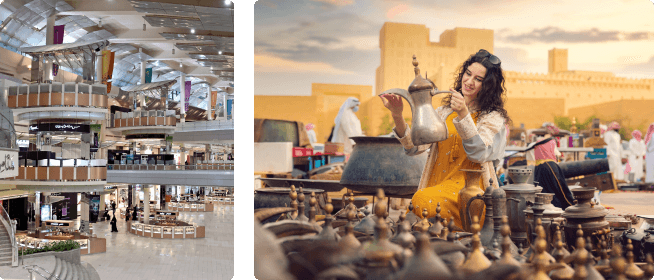
Whole days can be lost in shopping centres like Riyadh Park Mall, which has palm trees beneath its waved, glass roof, and The Zone, an open-air precinct complete with fountains and café terraces. Save the best til last: at 302.3m high, Kingdom Centre is Saudi’s tallest skyscraper, and it’s also home to the city’s top designer shops (and some great lunch choices – splash out on some sushi at Yokari).
Stock up on souvenirs early in Riyadh’s ancient, labyrinthine souqs, like Souq Al Zal, which has been open in the historic enclave of Diriyah since 1901. Arrive at 6pm for the daily auction of antiques, ceremonial swords and rugs, or head to Taibah Souq for rows and rows of gold and diamond shops.
High-rise dining
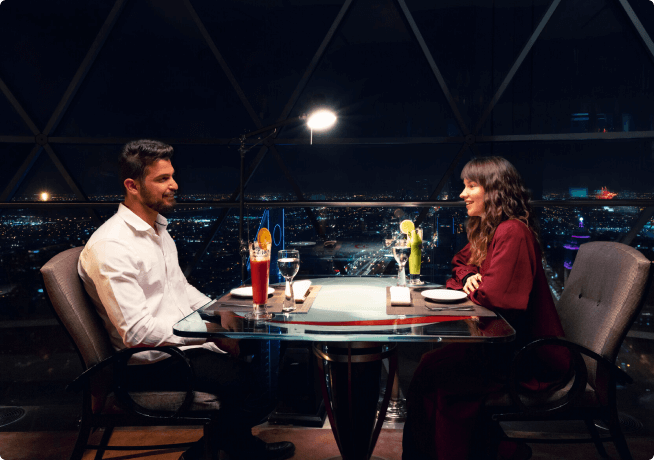
Have an extravagant meal to remember at the top of the Al Faisaliah Centre, a commercial skyscraper in the business district that’s the country’s fourth-tallest building. The 24m-diameter gold ball, at its tip, is a restaurant with 360-degree views and modern European fine dining.
But you can’t start your Saudi experience without eating the traditional way, too. Head to Najd Village to eat traditional dishes like hashi (baby camel) with rice, in an authentic setting. The set menu comes with coffee, dates and incense for the table.
Ancient heritage
Riyadh is blessed with having one of Saudi’s most fascinating UNESCO World Heritage Sites: the At-Turaif District in Diriyah. Just northwest of the city, this was the first home of the Saud dynasty and the site where the kingdom as we know it was born. Today, it’s a beautifully preserved 15th-century citadel, in a unique Najdi architectural style, with palaces and museums to explore.
Just over a two-hour drive north of here is one of Saudi’s most visited attractions: the Edge of the World (also known as Jebel Fihrayn). A natural cliff edge that’s part of the larger Tuwaiq ridge, it offers vertigo-inducing views 300m down into an ancient ocean bed (now desert). Look out for camels on the sand below – tiny specks on an ancient caravan route that once passed through here.
Days 5-9: Jeddah
The all-year-round warm city of Jeddah is the birthplace of multi-vibrant cultures, with sizzling street food (check out the all-female-run burger joint Serial Griller), a burgeoning music scene and more diverse fashion than you’ll see elsewhere.
Brand-new waterfront
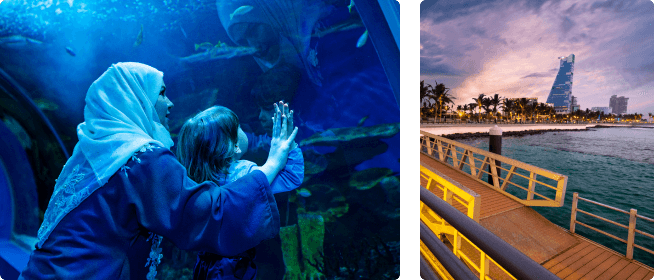
Jeddah’s waterfront district, called the Corniche, should be your first port of call to orient yourself in the city. Developed in 2017, the 30km coastal stretch features the highest fountain in the world (King Fahd’s Fountain), a running track, bike hire, shops, restaurants and an aquarium. Let the sea breeze cut through the heat and see where Saudi’s young families hang out. You might even spot some seals splashing in the water.
Preserved old town
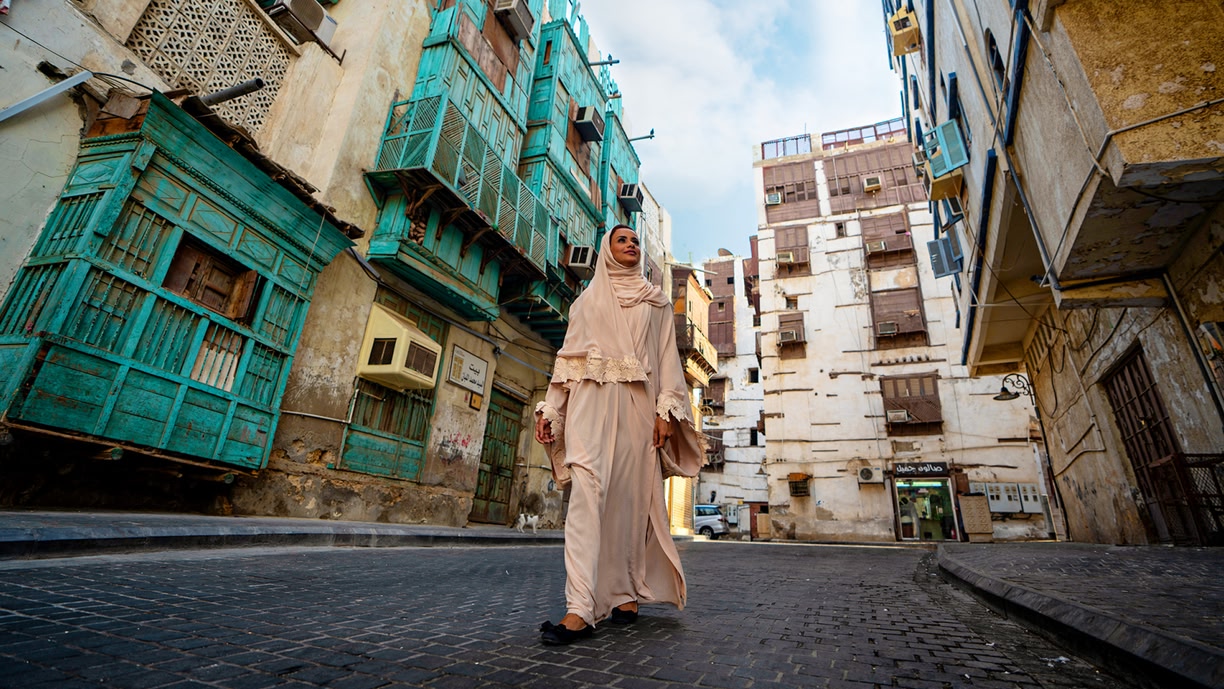
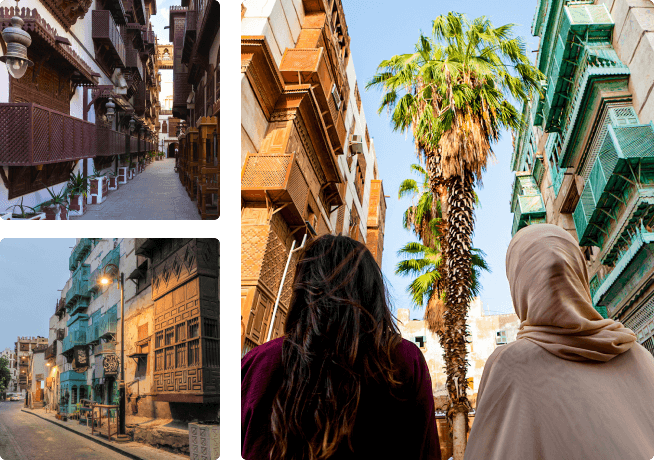
It’s easy to see why Jeddah’s historic old town is UNESCO protected. From the 7th century AD, Jeddah was a major port for Indian Ocean trade routes that were transporting goods to Makkah – the birthplace of Islam. Thanks to this, years of trading left a diverse architectural legacy in Jeddah, and today Historic Jeddah is an immaculately preserved collection of tall, 19th-century merchant houses with intricately carved, wooden shutters.
Wander through the quiet streets (the houses are no longer inhabited), pop into a sleepy souq and admire the architecture. There’s even a small museum in one of the old houses, for a glimpse of Jeddah past.
Thriving art scene
Jeddah has a vibrant art scene, and you can see both old and emerging Arab artworks in its dozens of galleries. For contemporary pieces, visit Athr Gallery and Art Jameel – two of the leading art spaces in the city, which regularly hold domestic and international exhibitions. Then there’s Darat Safeya Binzagir, the private collection of Saudi Arabian artist Safeya Binzagir who was the first female artist to exhibit her work in Saudi Arabia, in the late 1960s.
Days 10-14: Yanbu
Your third base is Yanbu, whose old town of narrow alleys is reminiscent of Jeddah’s – and even contains Lawrence of Arabia’s former house (which is currently being renovated and transformed into a museum). The restored houses made of Red Sea coral have the same beautifully latticed wooden shutters and balconies, and flank a new, tourist-friendly development.
Developed port area
Historic Yanbu, by the port, is a popular cruise ship calling point and caters to visitors with its restored souq bursting with trinkets, incense and dates, and clean plaza of terraced restaurants and shisha bars. Not just for tourists, you’ll also see groups of young Saudis congregating here for cups of cardamom coffee (you should expect to have an impromptu chat, or maybe even a selfie).
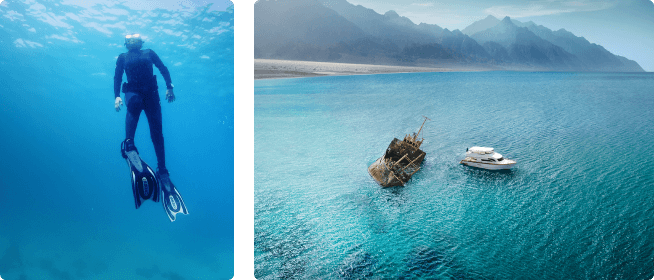
World-class diving
Although Yanbu is the most famous dive area in Saudi, it’s relatively undiscovered as a global scuba destination. Now’s the time to take a Red Sea dive trip here, before everyone else realises it’s here. You’ll see sharks, rays, turtles and much, much more, swimming around the colourful reefs and shipwrecks of this beautiful spot that’s known as the ‘Pearl of the Red Sea’.
Saudi’s first UNESCO site
Many travellers head to Yanbu on their way to one of the crown jewels of Saudi heritage. From Yanbu, it’s just an hour’s flight inland to the newly built airport at AlUla – Saudi’s first-ever UNESCO world heritage site, deep in the ochre sand dunes of the Arabian desert.
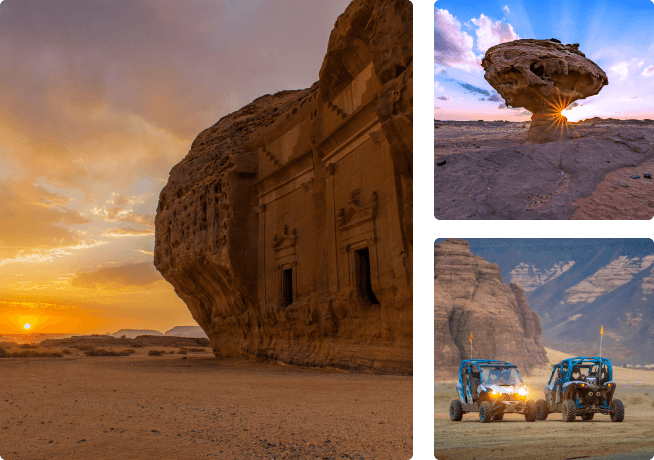
AlUla is a collection of Nabatean tombs, built directly into sandstone boulders in the first century BCE by the same civilisation that built Jordan’s Petra. Painstaking restoration work has revealed their original glory and unlike at Petra, you’ll be among only a handful of other tourists there, marvelling at the artistry of the carved facades in an otherwise empty expanse of desert. It won’t be like this for long – get there before everyone else finds out about it.
Take me there
Ready for your first trip to Saudi? Apply for an entry visa, then make sure you check out our latest deals first.